About the project
I have been leading the design of Shopify’s app platform since 2021.
During that time, we’ve seen this grow from a loosely affiliated collection of tools and services to a cohesive, fully-featured, interconnected platform supporting thousands of apps (including 76,000 new apps in 2024), millions of app installations (>25M), and over a billion dollars in developer revenue in the previous year. No matter which measurement you use, Shopify runs one of the world’s top five largest app ecosystems, through which hundreds of billions of dollars of gross merchant value (GMV) flows every year.
Fig. 02.01 shows the developer console in summer 2025.
Shopify.dev – a love letter to developers
Shopify’s developer documentation plays a crucial role in helping app builders. The site, which encompasses over 2,500 articles of content, is a comprehensive repository of knowledge and references, spanning every API, function, component and pattern available to developers. Making sense of all this complexity requires a fine attention to the details: colors, badges, accordions, code boxes, diagrams – all of these have been crafted with attention to helping developers navigate this complexity.
It also includes Shopify’s dev assistant (fig. 02.02 ), which is an AI chat agent that can answer questions, guide you to answers, or give you code to use in your project. Additionally, all of Shopify’s references are hosted on an MCP server for easy use within a developer’s IDE.
Apps for every purpose
With tens of thousands of apps available to merchants – including several built by Shopify – the app ecosystem fills a valuable space in the merchant’s journey of building their business, while providing a critical moat for the company. Any way you want to sell, whether that be through bundles, subscriptions or discounts; domestically or internationally; or as a boutique or large-scale seller, there are apps merchants can use to power their store.
Apps extend every Shopify surface. This includes the ability to extend the merchant admin (Transcy, fig. 02.03 ), checkout and point of sale.
Raising the bar of app quality
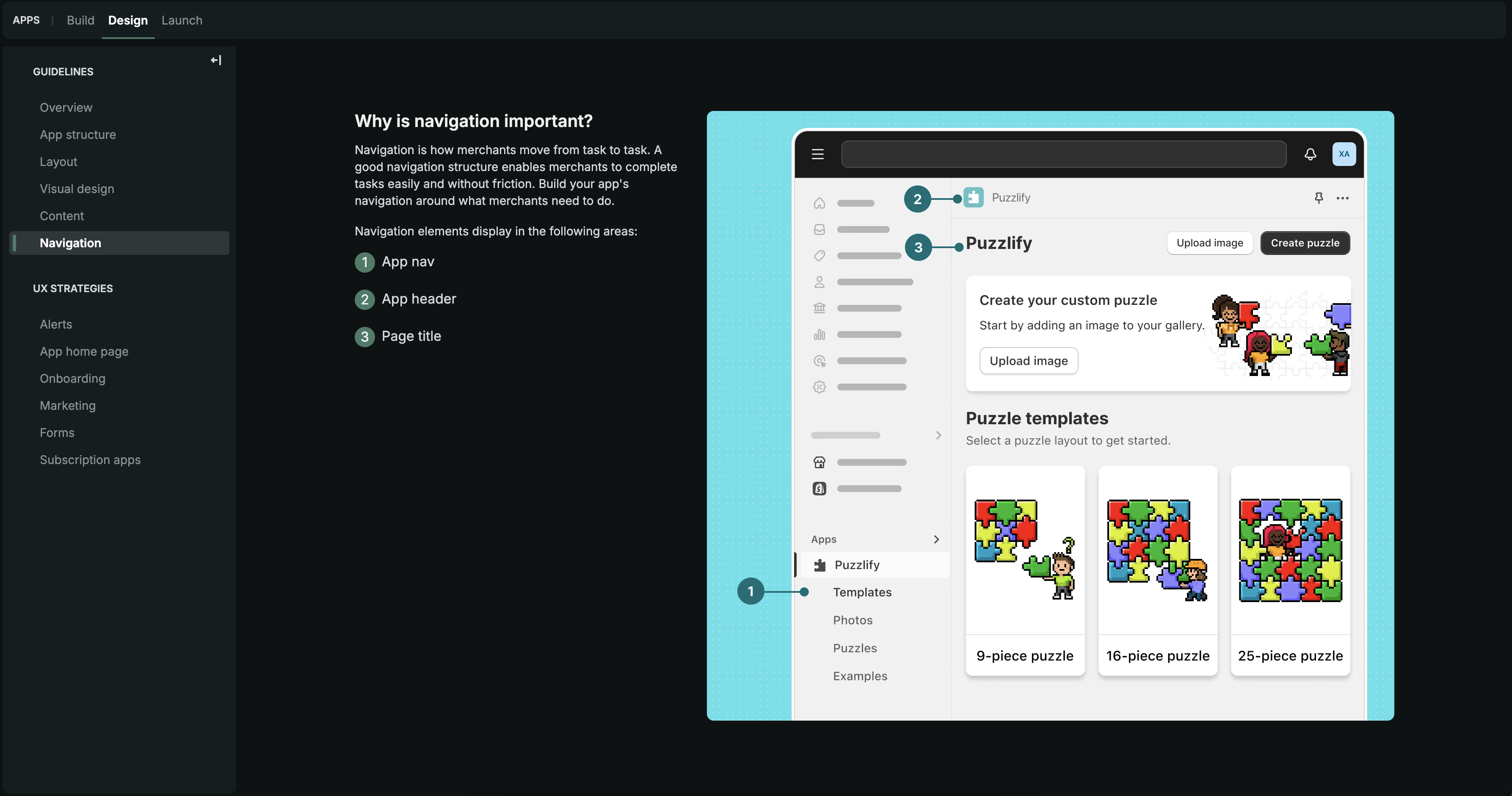
One of the team’s most important aims is to explain not just the what , but also the why behind how to build great apps (fig. 02.04 ). App developers often told us how valuable it is to have an opinionated set of design guidelines – but we also recognized that these guidelines need to be backed up with well-crafted and flexible web components, patterns with usable code, and the ability to test and iterate quickly.
In addition, in 2023 the team created a new program: Built for Shopify . This introduced a new quality tier to the ecosystem, whereby app developers who met additional standards would be rewarded with Shopify’s seal of quality and premium placement in the app store.
In all of these cases, the design team was often a key decider in determining these standards, and explaining them to developers.
Showcasing merchant value
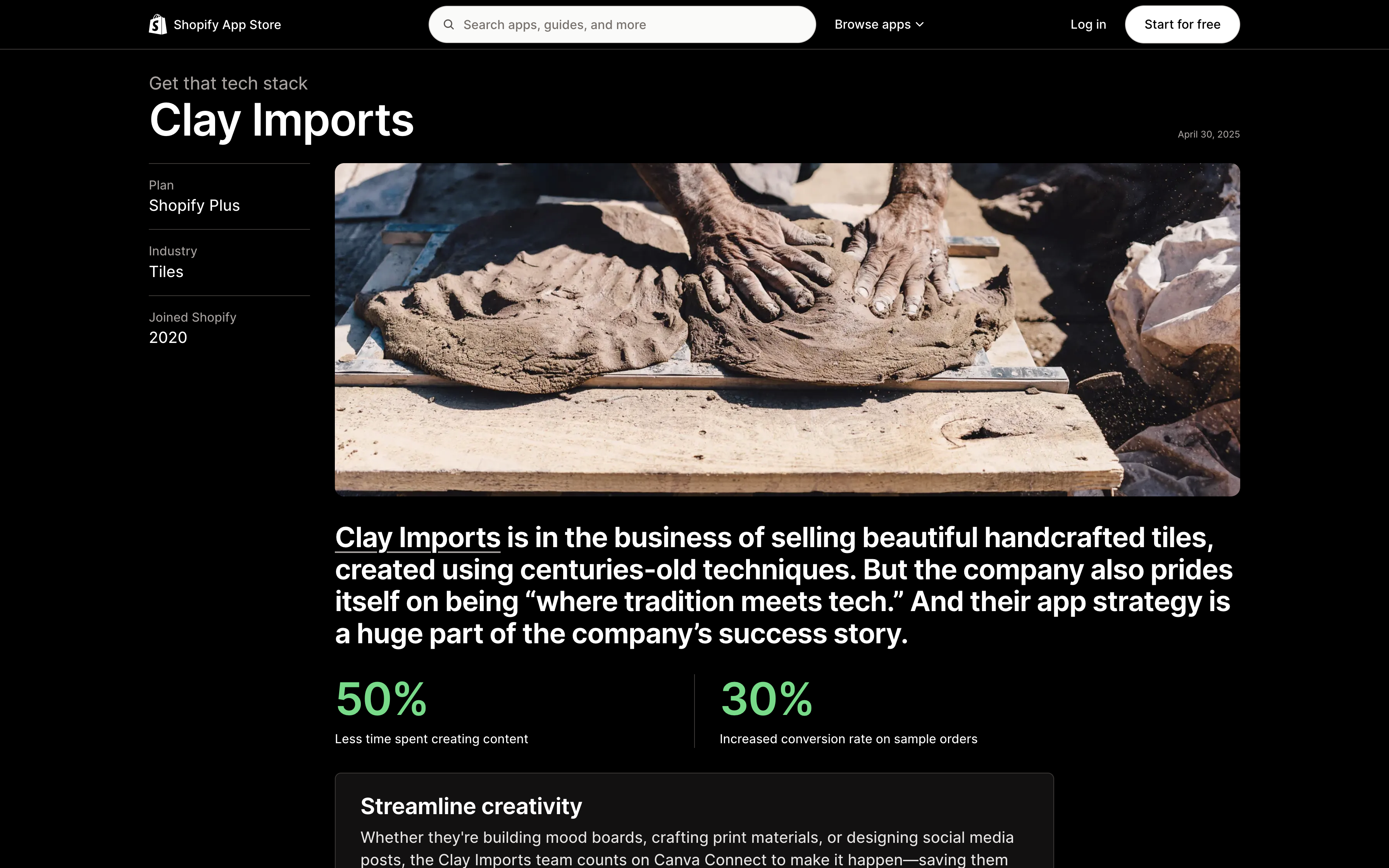
Shopify’s app store is not just a place to find and install apps – it’s also a place for merchants to learn (fig. 02.05 ). Our editorial design includes features that peel back the cover of how successful merchants have set up their store, with app recommendations and testimonials to guide merchants’ decisions when deciding which apps might be right for them. The design approach to these features is bold type and beautiful imagery, combined with meaningful store data and technical information to keep the story grounded.
Close